El Bañuelo in Granada: History, visiting information and what to see at Granada’s most iconic Arab Baths
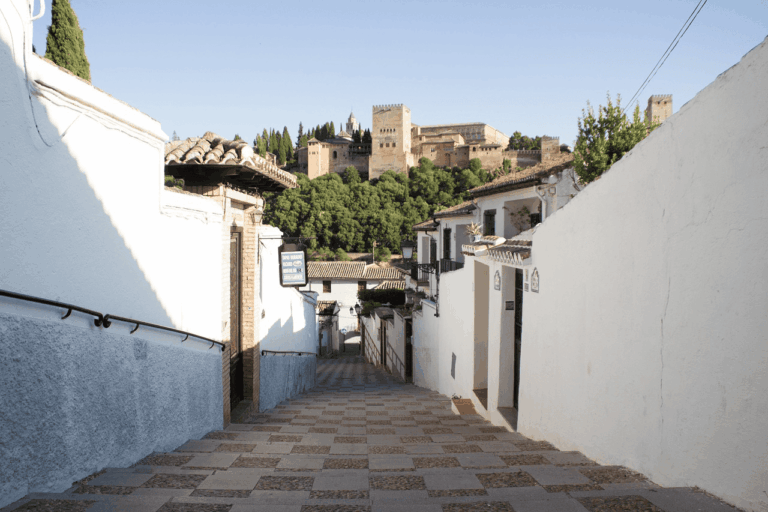
Walking through Granada’s Albaicín neighbourhood along the legendary Carrera del Darro is a constant source of wonder, but it can also take its toll on the body. As your feet follow the cobbled streets, you pass walls that hold centuries of history. One of these places, discreet and silent from the outside, is El Bañuelo in Granada, one of the oldest and best-preserved historic Arab baths in Granada and on the Iberian Peninsula.
However, visiting a historic monument often remains a purely visual and intellectual experience. You can admire its beautiful brick vaults and capitals worn by time, yet something essential is missing: the humidity in the air, the echo of water droplets running over stone, the scent of resins and the enveloping warmth. Admiring the architecture without feeling the water means understanding only part of its history. The mind registers dates and facts, but the body longs to experience the restorative pause that formed part of the daily rhythm of this city for centuries.
To truly understand this heritage, visual contemplation needs to be combined with a physical and sensory experience. After discovering the ruins and beauty of this 11th-century bathhouse, the natural next step for travellers is to immerse themselves in Andalusian water culture, allowing the body to recover its natural capacity for regulation through a ritual that remains as alive today as it was a thousand years ago.
History of El Bañuelo in Granada
The Bañuelo of Granada, historically also known as Baño del Nogal (Hammam al-Yawza), was never simply a place for a quick bath. Traditionally, bathhouses were not only places for hygiene, but also spaces where the body could find a different rhythm. Its solid 11th-century construction makes it an exceptional survivor of Granada’s Zirid period and a silent witness to how the city’s inhabitants understood personal care as an essential part of everyday life.
Andalusian origins and historical importance of the monument
In Islamic Granada, public baths formed part of everyday life. They were not isolated luxury spaces, but places integrated into the urban fabric, often located near mosques or residential areas, where hygiene and social interaction came together. El Bañuelo followed precisely this model: it was a place for cleansing, spiritual preparation and social gathering.
Its historical importance lies in several key aspects that help us understand Granada’s past:
- A reflection of medieval urban life: It reveals how the intricate network of public bathhouses functioned within a medieval Islamic city.
- Symbolic and practical value: It helps us understand the vital importance of water in Andalusian culture, not only as a resource but also as an element associated with purification.
- A holistic approach to care: It shows that bathing was not merely functional, but an experience connected to caring for the body and to a broader sense of harmony.
In this sense, visiting El Bañuelo is almost like discovering the origins of practices that still live on today when we seek to experience a hammam in Granada from a contemporary perspective.
El Bañuelo’s most remarkable architectural features
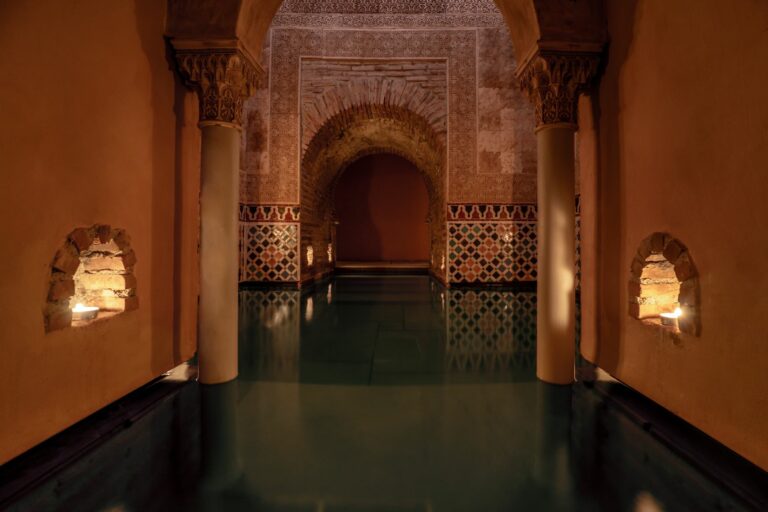
As you enter its rooms, the brick structure itself reveals a deep understanding of the body and its response to temperature. The spaces are arranged according to the natural sequence of thermal contrast: the cold room, the warm room and the hot room. This layout was far from accidental; it was a way of accompanying the body as it adapts, responds and gradually finds balance.
Look upwards and one of the most striking features is immediately revealed: its vaulted ceilings, pierced by beautiful star- and octagon-shaped skylights. These openings did more than allow natural light to enter, creating an atmospheric semi-darkness conducive to lowering the nervous system’s state of alertness. They also helped regulate steam, allowing the space itself to breathe. Within this softly filtered light, the body learns to adapt without resistance and to find stability within change.
Frequently asked questions about El Bañuelo in Granada
Planning your visit to this historic site at the foot of the Alhambra is a first step towards reconnecting with the roots of Granada.
How long does a visit to El Bañuelo take?
A visit to this historic monument usually takes approximately 30 to 40 minutes. It is a peaceful visit, but we always recommend checking the latest El Bañuelo Granada opening hours before planning your day, as access conditions and visitor capacity may vary depending on the season.
Once you have finished walking beneath its empty vaults and horseshoe arches, you may realise that contemplating Granada’s history is beautiful, but truly inhabiting it can be transformative. The human body does not function through stillness, but through adaptation. After hours spent walking, discovering and observing the city, your body may ask you to complete the cycle.
We invite you to go beyond simply observing and to experience the hammam for yourself in our contemporary space, just a few steps away. It is the perfect opportunity to move from cold stone to warm water and experience first-hand an ancient understanding of water as a living force, capable of creating and restoring a quiet sense of balance. Because ultimately, balance is not about avoiding contrasts, but learning how to inhabit them – and it is there that the body reveals its full intelligence.